
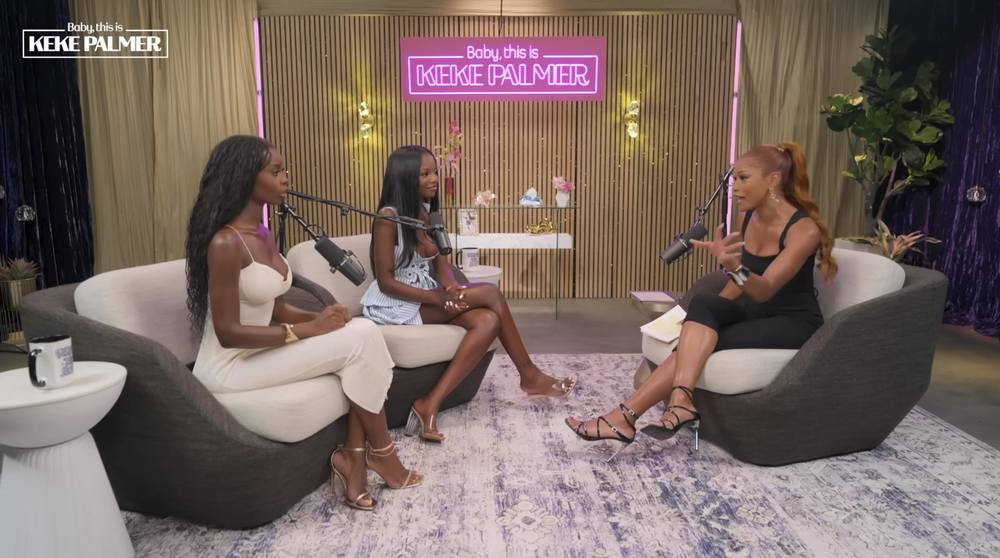
Black women have always struggled with being looked at positively in society's eyes and are often portrayed a certain way. The main way they are perceived is as an “angry black woman,” which is unfair because before they even open their mouth to speak, people look at their face and judge them for looking angry and tell them to smile more. It isn't just this way in the everyday world but especially on reality TV. It is hard for a black woman to go on TV and not be looked at as angry or ghetto.
It has gotten to the point where people are calling reality for what it is, being against black women, and that reality TV has “racial bias,” which is unfair treatment or judgment against a group of people because of their race.
Examples of this come from TV series like “Baddies,” “Love Island,” “Housewives,” “The X Factor” and many more. A lot of young teenage girls and even younger people watch “Baddies” for entertainment, but instead of being entertained, they are being influenced. And it's not their fault that the producers are making these scripts to create more dramatic, tense storylines on the show. When you watch the show, all the black women on there are shown as loud, ghetto, angry and fighting, which influences people to view black women as a negative representation instead of a positive role model that many know they can be.
“Love Island” has to be the worst show by far to show how black women are portrayed on TV. Even when they show emotion on TV and feel any type of way about a friend betraying them or hurting them, the world looks at them as fake. Some people took it so far that they even took pictures of the black women cast members and filled their social media pages with racist comments and images. Keke Palmer interviewed the black women on “Love Island” and even spoke out about how whenever the cast members spoke up and voiced how they felt after keeping their emotions locked away, the world viewed them as “too aggressive,” “too loud” or “rude and disrespectful,” which is unfair because so many scenes are cut that we viewers don't get to see. On the podcast “Baby,” which is hosted by Palmer, she talked about the double standards of reality TV, how emotions and the essence of the shows are often perceived as a black woman versus a white woman. She voiced the backlash black women get for expressing themselves, while others get praised and recognized for voicing how they feel.
Young black women are being shown in a negative light of what's on reality TV instead of the positive role models that a lot of black women are. According to the American Association of University Women, black women earn more bachelors, masters and doctorate degrees than their male counterparts, and they are beginning to outpace other demographic groups as well, but people don't talk about that because most people view black women as something negative and not a person to look up to. Some of the only black women that are mentioned as role models are Serena Williams and Michelle Obama, but there are many more, especially considering that they are highly educated and have to work twice as hard in America being black and being a woman.
Ultimately, the way black women are portrayed on reality television reflects a larger issue within society. These shows do not simply entertain, but they shape how people think, especially young viewers who are still forming their own opinions. When black women are repeatedly shown as aggressive, loud or unstable, it reinforces harmful stereotypes that follow them into real life, affecting how they are treated in schools, workplaces and social spaces. Reality television producers must take accountability for the narratives they create and the damage those narratives cause. Black women deserve to be seen in their full humanity – emotional, intelligent, complex and powerful – not reduced to stereotypes for ratings. Until the media begins to portray black women with fairness and respect, these biases will continue.