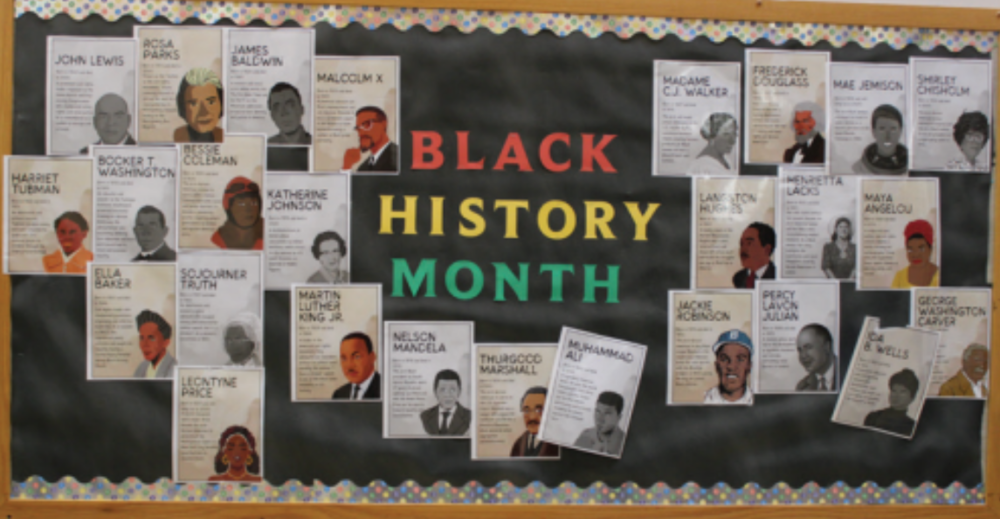
At Warren Central High School, Black history often feels underrepresented despite the school being predominantly Black. The school shows visible effort in celebrating Hispanic Heritage Month: hallways are decorated, announcements highlight influential leaders and students are called to the commons to take photos with their nation’s flags and learn about Hispanic scholarships. These efforts reflect a commitment to diversity and inclusion. However, many students and teachers have begun asking why Black History Month doesn’t receive that same level of depth and energy.
Each February, classrooms that address Black History often focus on familiar names like Martin Luther King Jr., Harriet Tubman and Rosa Parks. While these figures deserve recognition, limiting the narrative to just a few well-known individuals sends the message, whether that message is intentional or not intentional, that Black History begins and ends with them. In reality, the struggle and contributions of Black Americans are far broader.
For example, Claudette Colvin refused to give up her seat nine months before Rosa Parks at just 15 years old. Her story is rarely emphasized, partly due to colorism and respectability politics that influenced who was chosen to represent the movement.
Similarly, the destruction of the Tulsa Race Massacre, often referred to as Black Wall Street, is not discussed enough, despite its major impact on Black economic progress. In 1921, a false accusation against a Black teenager led to white mobs attacking Greenwood in what is now known as the Tulsa Race Massacre. Over the course of two days, homes, schools, churches and more than a thousand Black-owned businesses were burned to the ground, and hundreds of Black residents were killed in the process. Airplanes were even used to drop bombs, making it one of the most violent racial attacks in American history. Yet, for decades, this massacre was left out of textbooks. The silence of the uncomfortable truth about racism is not accidental, and it reflects how history is often shaped by those in power. When these stories are ignored, it creates the false narrative that black progress only existed through suffering, rather than also through innovation, wealth, resilience and self-determination. Black women, in particular, are frequently underrepresented, despite being central to movements for education, healthcare and political change.
Additionally, Black identity itself is diverse. Warren Central includes students with deep African American roots as well as students from Caribbean communities, including Haiti. The Haitian Revolution, one of the most powerful revolutions in world history, is rarely talked about or explored in depth in U.S. classrooms.
Research from the Southern Poverty Law Center shows that many high school seniors struggle to identify key facts about slavery and the Civil Rights Movement. This leaves students with incomplete voices and perspectives. An open-minded curriculum, including more works by Black authors in literature classes, benefits everyone. This is not about comparing heritage months or diminishing Hispanic Heritage Month. Both deserve strong recognition. The issue is consistency. Warren Central can create vibrant celebrations for one cultural group. It can do the same for Black History Month with broader representation, deeper conversations and more diverse figures.
Black history includes inventors, poets, scientists, immigrants, activists and revolutionaries. It includes stories of struggle but also innovation, leadership, joy and culture. Expanding the narrative does not erase anyone. It strengthens the understanding for everyone. Black history is American history, and it deserves to be taught fully, honestly and year-round, not just in the month of February.