
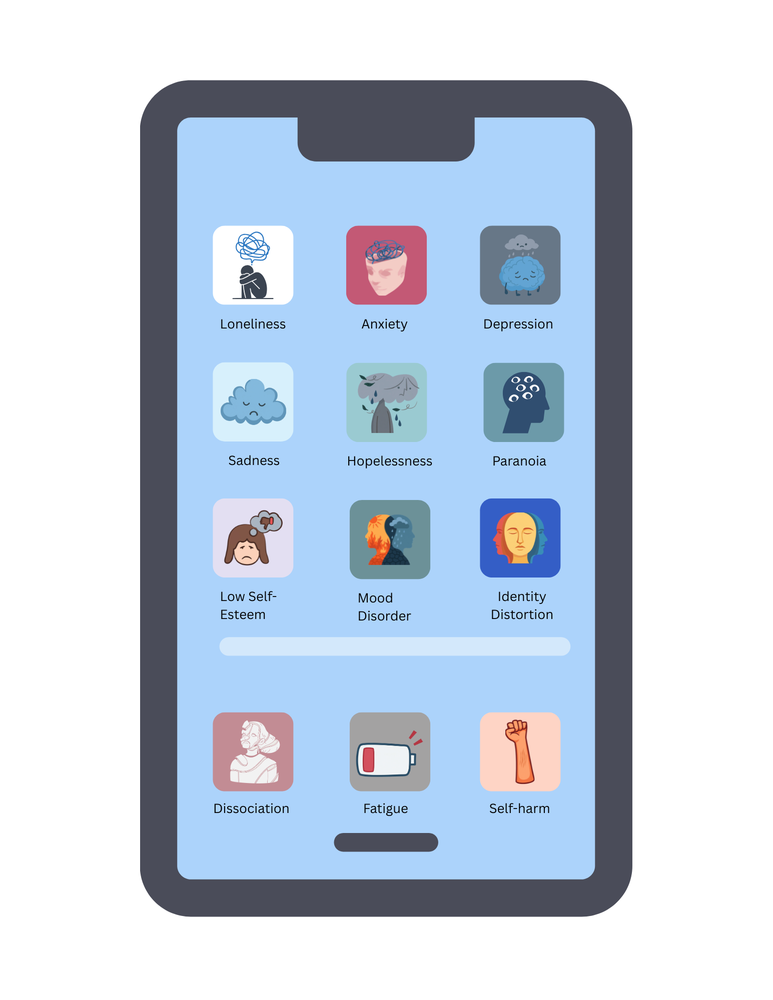
Spring is right around the corner, which is the time to go out, enjoy the sunny weather and meet people. But today, people are afraid to interact and talk to each other for fear of appearing awkward, uninteresting, or vulnerable. They’d rather look cool in the eyes of others and stare at their phones than start small, awkward conversations that could turn into long-lasting friendships.
“It’s like people just want to be that nonchalant persona,” junior King Lossie said. “It's rare that you'll ever see anyone actually being present in a way.”
All this fear leads to loneliness, which creates a cycle where people are lonely, but reaching out to others feels impossible, and it impacts them more than they realize. It increases the risks of developing depression and anxiety and might even lead to suicide. Physically, it causes even more damage. The U.S. Surgeon General stated that lacking social connections carries the same health risk as smoking 15 cigarettes a day. Choosing fear over connection isn't worth losing our health. It’s ironic that we feel lonely but refuse to do anything about it and it’s costing us both our physical and mental well-being.
This problem is often mainly attributed to the isolation of COVID-19, but it started prior to the pandemic. According to the National Education Association, the percentage of high school seniors who gathered with friends in person dropped from 44% in 2010 to 32% in 2022. It shows that before the lockdown, we were already disconnecting from each other and it was easier to blame the pandemic than anything else, like social media. When the pandemic hit, it made the situation worse. It slowed down the social development of many middle to high school students, increasing the fear of face-to-face interactions.
"When I was younger, I would make new friends just by going up to new people,” sophomore Alejandro Martinez said. “Now, in high school, I mostly don't talk to new people unless I have to."
During the pandemic, the use of social media surged as people got used to seeing social interactions online, where the video is carefully curated and edited, rather than experiencing them in real life. It also changed the way we communicate with each other. The curated content set high, unrealistic expectations that made people fear appearing imperfect in front of others, all while increasing the feelings of comparison. According to the Pew Research Center, only 22% of people reported feeling closer to people they know well compared to pre-pandemic times. A large majority of other people don't have that community, which shows how isolated we are despite using the apps that are supposed to connect us more.
“Everyone is usually spending time behind screens and talking to people online, that we usually forget how to talk to people in real life,” Martinez said.
With spring around the corner, it's time to put down the phones and look at the people around us. Making connections with people doesn't have to be complicated. A simple hello to someone can be the beginning of a meaningful friendship, and without knowing it, we might find someone who could change our lives for the better. Maybe the bravest thing we can do this spring is start an imperfect conversation with a random stranger.
"It's scary,” junior Darby Driscoll said. “You don't know them, but for all you know, they could be the most fantastic person in the world."